
WHAT IS TEMPORARY RESIDENCY?
If you are a foreign national who wants to visit, study or work in Canada for a limited period, you might need to get a temporary resident visa. In most cases, obtaining a temporary resident visa is required in order to enter or remain in Canada, unless you are a citizen of a visa-exempt country.
Temporary resident class has four subcategories: Visitors, students, workers and temporary resident permit holders.
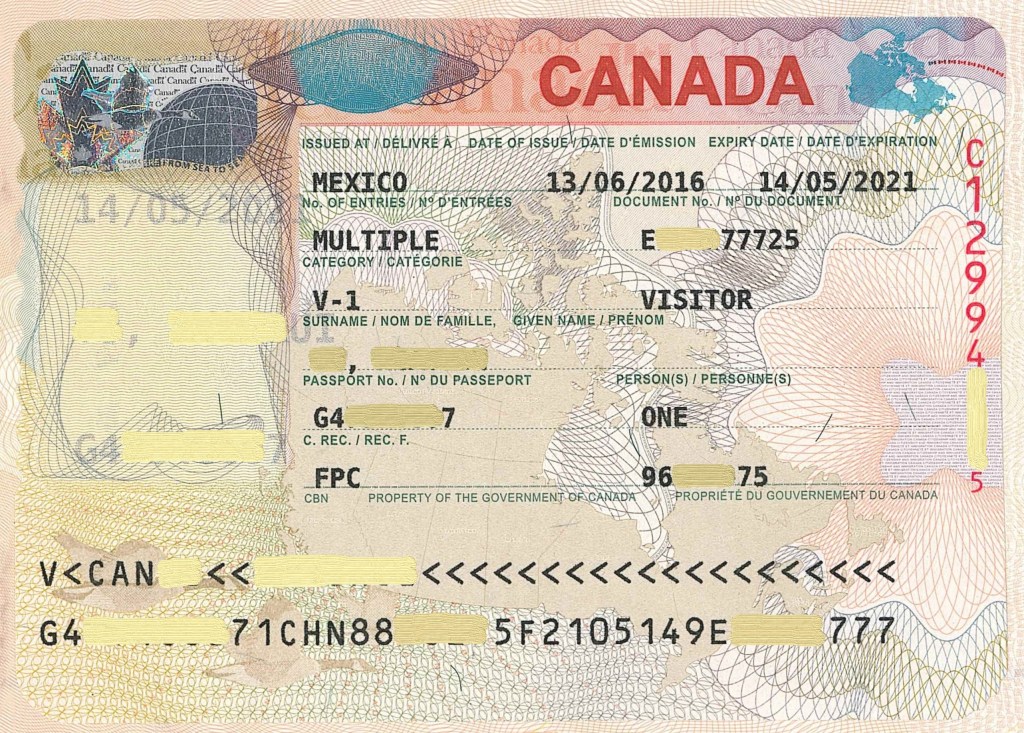
1. VISITORS
If you are planning to visit Canada but not planning to work or study a course that is longer than 6 months, you will need to get a visitor visa or eTA, depending on your nationality. Your visitor status will expire six months after entry to Canada, unless the CBSA officer issues a Visitor Record or writes a different duration under the entry stamp.
2. STUDENTS
You will need to apply for a study permit if you are planning on attending a course that is longer than six months. Unless you are a US citizen, you will need to apply for a study permit before coming to Canada. Depending on whether you are from a visa-requiring country or a visa-exempt national, you will be issued either a student visa or an eTA along with the letter approving your study permit application. The study permit will be given at the port of entry.
3. WORKERS
In order to work in Canada, you will need to obtain a work permit, which is a written authorization to work in Canada. While some work permits only allow the applicant to work in a specific position for a specific employer, there are other work permits that are more open, allowing workers to obtain employment in an industry or with any employer in a given occupation. Once your initial work permit application has been approved, you will be given the work permit at the port of entry.
Work permits fall into two general categories:
– 1) International Mobility Program: In this program, foreign nationals need to obtain a work permit but are exempt from the LMIA requirement. It includes international non-trade agreements that allow people to work temporarily in Canada. Other permit types under this program are Spousal Work Permits, Post-Graduate Work Permits, Intra-Company Transferee Work Permits, etc.
– 2) LMIA-Required Work Permit: Once the employer obtains an LMIA, the employee applies for an employer-specific work permit.
What is a Labour Market Impact Assessment (LMIA)?
Before hiring a foreign national living outside of Canada, Canadian employers need to test the labour market to see if they can find local candidate to that is suitable for the job. If they can prove that they cannot find a qualified candidate even after advertising the job, they can submit a Labour-Market Impact Assessment application. If Service Canada issues the employer either a positive or neutral LMIA, the employer can hire a foreign national who is outside of Canada.
There are five primary LMIA categories:
- High-wage positions
- Low-wage positions
- Global talent stream
- Primary agricultural stream
- Academics
4. TEMPORARY RESIDENT PERMIT
A TRP is different than a temporary resident visa (TRV) and it is issued under exceptional circumstances. If a foreign national is inadmissible or does not meet the requirements, a TRV can be used as a temporary fix to the problem. However, it must be noted that issuing a TRP is highly discretionary and the minister will assess whether the foreign national’s temporary entry to Canada is justified under the circumstances.
Types of temporary resident visas:
- Single-Entry Visa: A single-entry visa is issued when the applicant’s purpose of visit is limited, such as participating in a one-time event. It allows the foreign national to enter Canada only once during the visa’s period of validity.
- Multiple-Entry Visa: Currently, all visitors are considered for a 10-year, multiple-entry visa. However, this does not mean that the visitor can stay in Canada for 10 years. Generally, visitors are allowed to stay in Canada for up to 6 months at once, unless specified by the immigration officer.
- Transit Visa: If a foreign national is transiting through Canada while on their way to another country and are going to stay in Canada for less than 48 hours, they have to apply for a transit visa, unless they are exempt. To see if you are exempt, check out IRCC’s website here.
- Parent and Grandparent Super Visa: Super visas are issued to parents or grandparents of Canadian citizens or permanent residents. They are usually valid for 10 years or up to the applicant’s passport expiry date, whichever is earlier. Super Visa allows multiple entries and foreign nationals can stay in Canada for up to two years.
Frequently Asked Questions:
Is there a difference between a visa and permit?
There is a significant difference between a visa and permit. A visa is placed in the applicant’s passport by a visa office if they meet the requirements for admission to Canada as a temporary resident. It is important to note that holding a temporary resident visa does not guarantee entry to Canada, as applicants need to be examined at the port-of-entry. A permit is a document that allows a person to work or study in Canada after they have been granted permission.
What is an eTA (Electronic Travel Authorization)?
If you are from a visa-exempt country, you need to apply for an eTA if you want to come to or transit through Canada by air. You are not required to obtain an eTA if you are going to be entering Canada by land or sea. Currently, eTA costs $7 CAD per person and is done online. Generally, eTA applications are processed within minutes and you will receive an email once it has been accepted. Please note that the eTA will be linked to your current passport and if it expires or is lost, you will need to apply for a new eTA.
There are exemptions to the eTA requirement, such as being a US citizen, holding a passport that has a diplomatic acceptance, or travelling by boat or by motor vehicle. If you are a Canadian Permanent Resident, you do not need to obtain an eTA.


 ASLAN IMMIGRATION CONSULTING