
WHAT IS PERMANENT RESIDENCY?
A Canadian permanent resident is a foreign national who has been granted the right to live and work in Canada indefinitely, but is not a Canadian citizen. Permanent residents enjoy many of the same rights and privileges as Canadian citizens, but they do not have the right to vote or run for political office, and they do not have Canadian passport.
According to IRCC, Canada welcomed 471,550 new permanent residents in 2023.
Permanent Entry Categories
Canada’s permanent immigration policy has three categories:
1. Family Class
2. Economic Classes
3. Refugee and Humanitarian Classes
Family Class
Canada recognizes the importance of family reunification, and provides a pathway for foreign nationals to join their family members and establish permanent residency. In order to be able to sponsor a family member, the sponsor must be a Canadian citizen or permanent resident.
To be eligible under family class, the sponsored person must be one of the following:
– Spouse, common-law partner, conjugal partner
– Dependent children under 22 years old who are single
– Dependent children above 22 years old if they are unable to be financially self-supporting due to a financial or physical disability
– Parents, grandparents and their dependent children
– Siblings, nieces or nephews if they are under 18 and orphaned
– Any relative if the sponsor does not have any family members in Canada and does not have the above listed family members to sponsor
Economic Class
One of the objectives of Canada is to develop a strong and prosperous Canadian economy. Canada’s Economic Class facilitates obtaining permanent residency status based on the foreign national’s skills, education, work experience, and potential contribution to the country’s economy.
Economic Class has the following programs:
– Canadian Experience Class (CEC)
– Federal Skilled Worker Program (FSWP)
– Federal Skilled Trades Program (FSTP)
– Business Immigration Programs
– Provincial Nominee Programs (PNP)
– Rural and Northern Immigration Pilot Program
– Atlantic Immigration Program (AIP)
– Caregiver Classes
– Agri-Food Pilot (AFP)
– Economic Mobility Pathways Pilot (EMPP)
– Quebec Economic Classes
Express Entry
Introduced in 2015, Express Entry is a system used by IRCC to process applications for permanent residency under the following economic immigration programs:
– Canadian Experience Class (CEC): For foreign nationals who have at least one year of skilled work experience in Canada.
– Federal Skilled Worker Program (FSWP): For skilled foreign nationals who have foreign work experience and can contribute to the Canadian economy.
– Federal Skilled Trades Program (FSTP): For skilled tradespeople who have work experience in certain trade occupations.
– Provincial Nominee Programs (PNP): For foreign nationals who wish to immigrate to Canada and settle in a specific province or territory. Not all PNPs offer Express Entry.
Express Entry replaces the old “first come, first served” system and is designed to ensure that Canada selects skilled immigrants who are most likely to succeed and contribute to the Canadian economy.
Eligible candidates create an Express Entry profile online, and are assigned a CRS score based on factors such as age, education, work experience, language proficiency, and other additional factors such as a job offer or provincial nomination. They wait in the Express Entry pool until IRCC conducts draws and sends invitations. In order to receive an invitation, the candidate must score more than the cut-off score. Those who receive an ITA (invitation to apply), have 60 days to submit a complete application for permanent residency.
After Becoming a PR
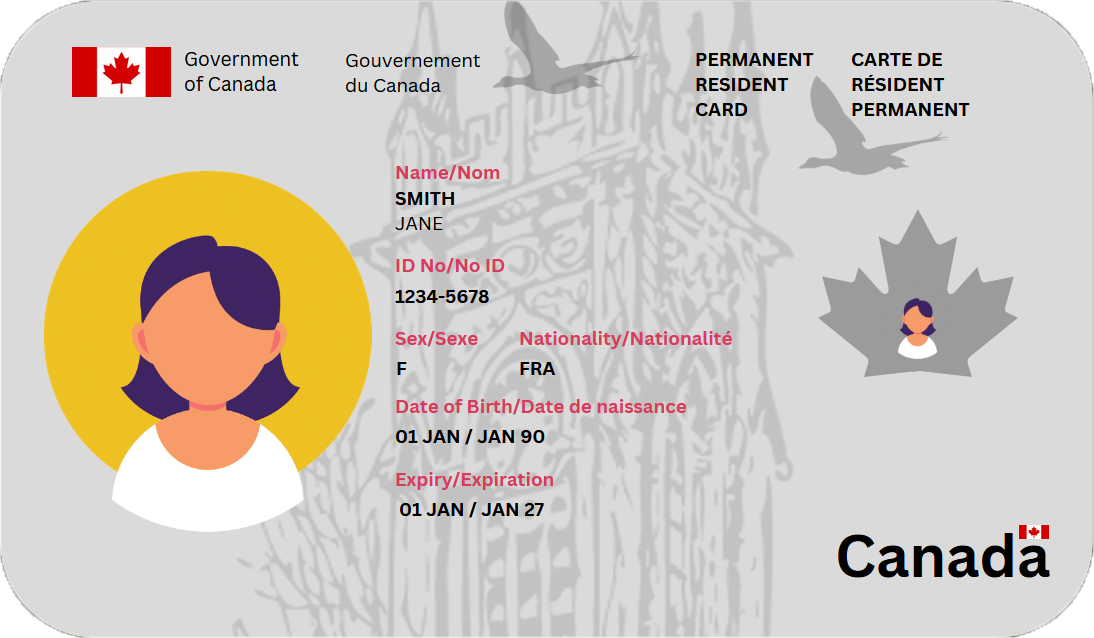
Once one becomes a permanent resident, they receive a permanent resident cart (PR card). It is recommended that permanent residents renew their PR card every five years. Permanent residents can enter Canada with just the PR card, they do not need to apply for a work/study permit or get a visa.
While permanent residents have the right to stay in Canada indefinitely, there are instances where one can lose their permanent residency status.
A permanent resident has to physically stay in Canada for more than two years within five years. If it is determined that a permanent resident spent less than 730 days in Canada with respect to every five year period, then they lose their permanent resident status as they have not met their residency obligations. However, there are exceptions to this rule if the permanent resident was outside of Canada:
– To accompany their Canadian spouse or common-law partner, or in the case of a child, a parent.
– To work full-time for a Canadian company


 ASLAN IMMIGRATION CONSULTING